
Every warehouse run on spreadsheets eventually has the same meeting: the file says 220 units, the shelf says 206, and nobody can explain the difference. Odoo answers with an idea borrowed from accounting - double-entry inventory. Stock is never simply "adjusted": every unit moves from somewhere to somewhere, and the system keeps the receipt.
That one principle unlocks everything else: lot and serial tracking with expiry dates, FEFO picking that ships the oldest stock first, cycle counts instead of full-shutdown inventories, and a search that tells you instantly where any product sits - across warehouses, even across companies. When a batch needs recalling, you know exactly which customers received it, in minutes.
The same team picks up to 30% more - by walking less.
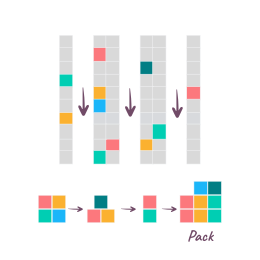 Wave picking
Launch picking by aisle or zone, then merge everything at the packing area. Built for large warehouses.
Wave picking
Launch picking by aisle or zone, then merge everything at the packing area. Built for large warehouses.
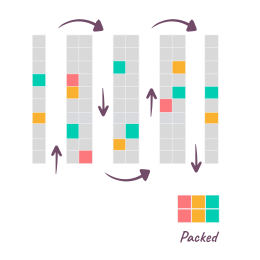 Cluster picking
Pick several orders in one pass, sorted into bins as you go - ready for packing. Ideal for small items.
Cluster picking
Pick several orders in one pass, sorted into bins as you go - ready for packing. Ideal for small items.
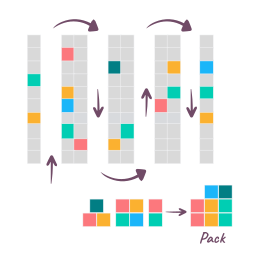 Batch picking
Merge several orders into one picking run and consolidate at the packing zone. One trip instead of five.
Batch picking
Merge several orders into one picking run and consolidate at the packing zone. One trip instead of five.
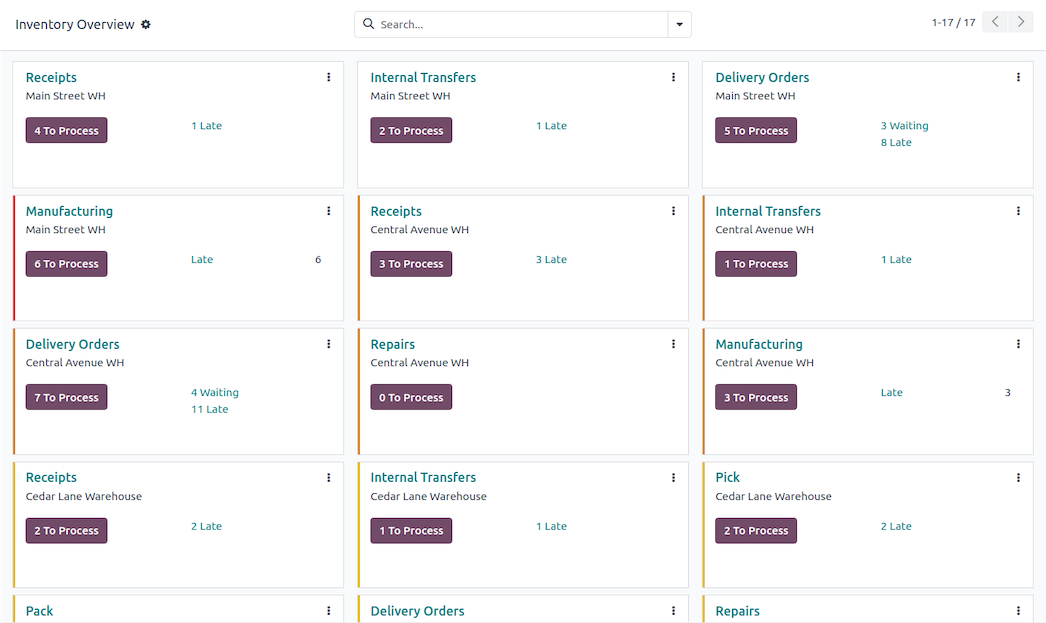
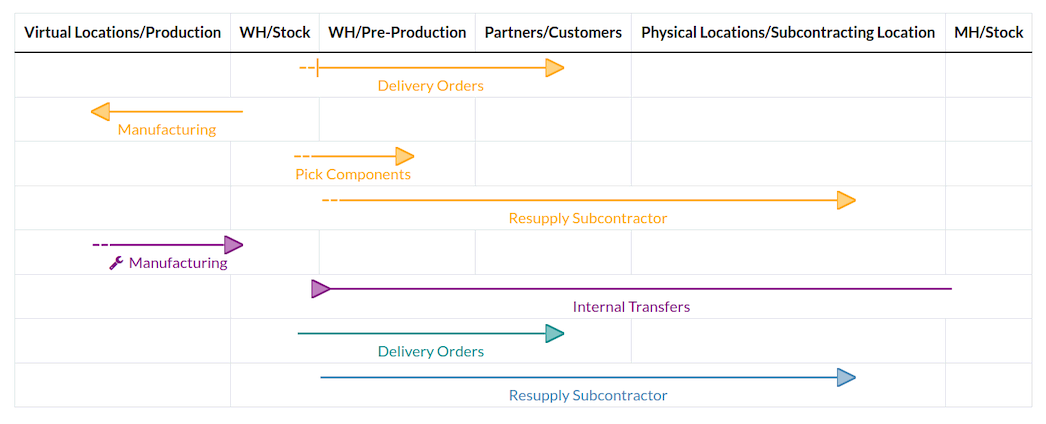
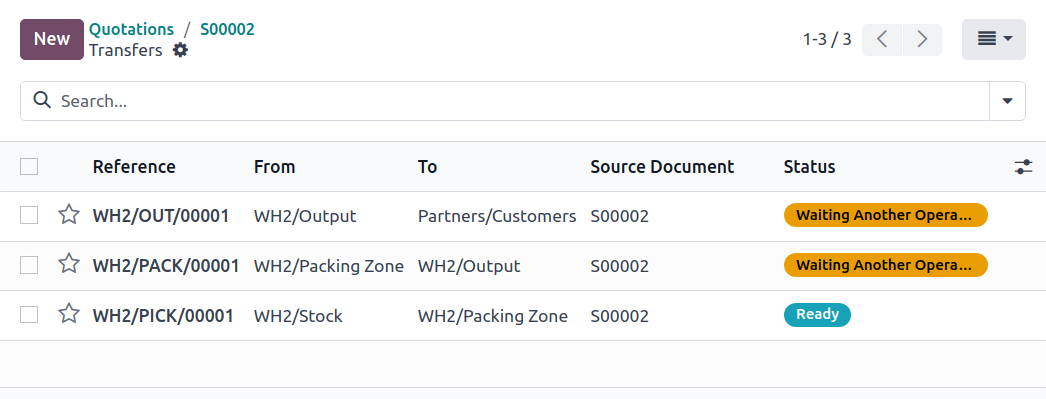
Odoo Inventory: one warehouse system, one shared database, zero double entry.
Odoo Inventory is the warehouse management system of the Odoo platform. Because it runs on the same database as purchasing, sales and accounting, a received pallet immediately updates available-to-sell quantities in the shop, drafts the vendor bill and posts stock valuation - with no connectors and no CSV exports. Companies switch to it from spreadsheets and standalone WMS tools that could not keep up with growth.
Day to day, teams use multi-warehouse operations with internal transfers; lot, serial and expiry tracking with FEFO; offline barcode scanning for receipts, picking and cycle counts; wave, cluster and batch picking strategies; and automatic reordering rules with vendor follow-ups. Valuation supports FIFO, AVCO, LIFO and standard price, perpetual or periodic.
ERP SWISS is an official Odoo partner and inventory is our home turf: most of our distribution projects - cosmetics, food, pharma-adjacent wholesale - are built around this module, including barcode hardware, batch and expiry flows, and Intrastat-ready reporting. Book a free demo to see it on your own warehouse.